Stories
Three-dimensional mixed-media works on repurposed objects and surfaces, where personal history, ecological urgency and the quiet language of matter converge into something entirely new.

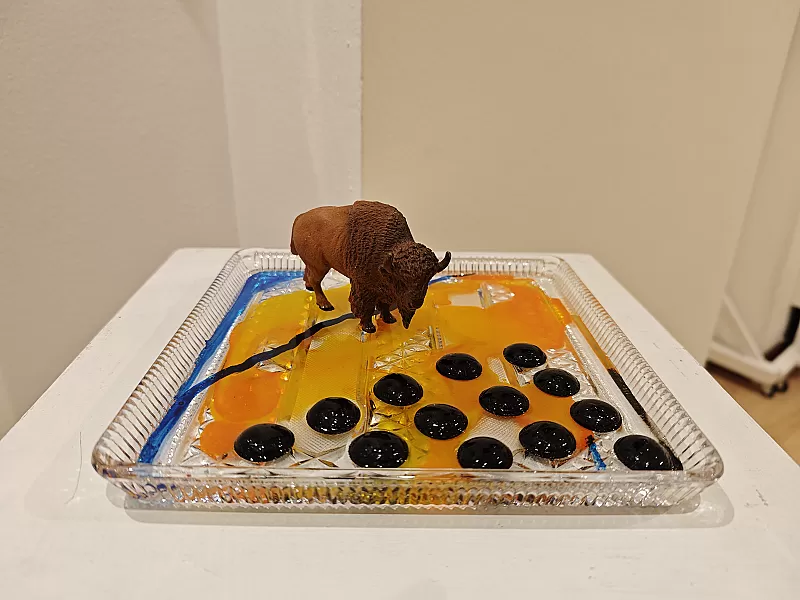


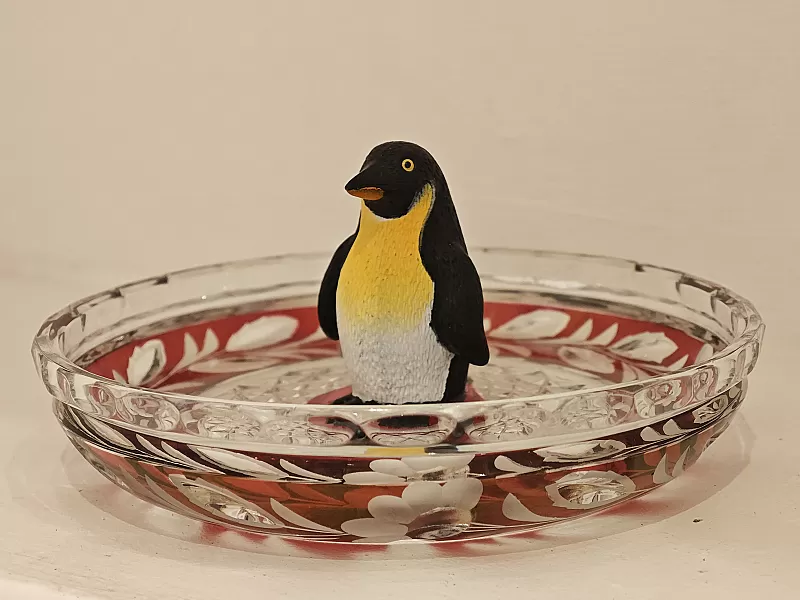


In 2023, I was living in Prague often wandering the antique markets.
And there, among the beautiful things that people no longer wanted, I found them. Bohemian crystal trays, cut glass, the kind that used to sit on sideboards in homes like the one I grew up in. The kind that connect me to my family history, and in particular to my great-great-grandmother, Giulia Trieb, who emigrated from Prague to Friuli in the 19th century.
Giulia was also my second name. The name that was removed when I was adopted into my new family.
The trays became a stage.
On that stage, I placed small antique figurines of animals found in the same markets. Animals whose natural habitats are disappearing. Creatures that are alone, isolated, displaced. Strangers in a world that was not quite made for them.
I know something about that feeling.
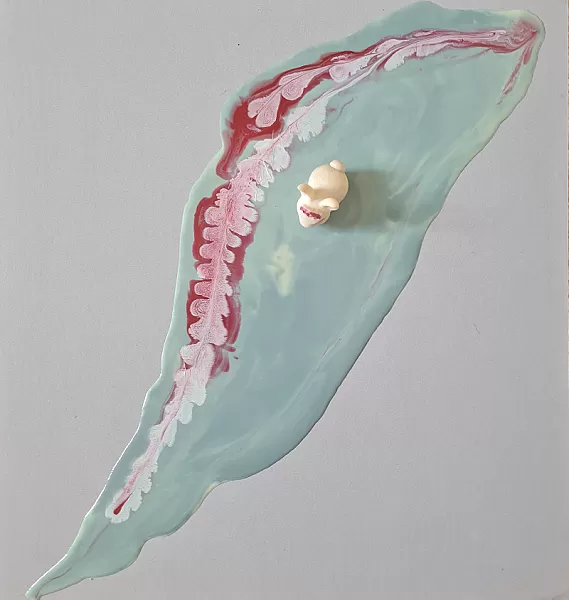
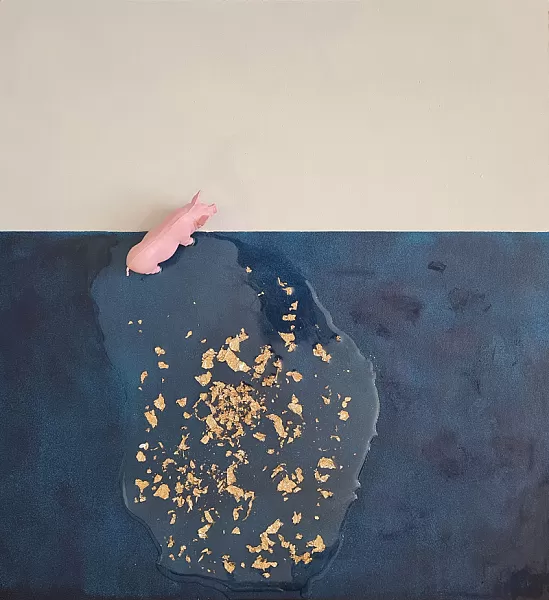
Over time, the series moved beyond the crystal trays. In Barcelona, the city's distinctive pavement tiles became new foundations for these stories. Discarded advertising cardboard offered another kind of surface, carrying the traces of a world built around consumption and disposability. The materials changed, but the underlying questions remained.
The works in the Stories series take shape on objects and surfaces that have already lived a life of their own. Vintage Bohemian crystal trays, Barcelona's iconic Panots de Flor, discarded advertising cardboard — materials from different places and contexts become unexpected stages for new narratives.
Layers of resin, found objects, textures and sculptural elements transform these surfaces into miniature worlds. Each material brings its own history: the intimate memory of a family heirloom, the collective identity of a city, the fleeting messages of consumer culture. Nothing is entirely erased. The past remains present, even as something new emerges.
The animals inhabiting these worlds are both themselves and something more: vulnerable beings, sometimes isolated or displaced, confronting environments that are no longer entirely their own.
What began as something deeply personal gradually grew into a reflection on a wider human experience: navigating between worlds, between identities, between what we inherit and what we choose to become.
And it became, too, a commitment: to give voice to those who cannot speak for themselves. The animals in these works remind us of the fragility of life, of disappearing habitats, and of the consequences of a world that too often looks the other way.
By bringing together discarded materials, personal memories and ecological concerns, Stories invites us to reconsider what we overlook, what we preserve, and what deserves a second life.
These are small worlds. But the stories they carry reach far beyond their boundaries.
In her three-dimensional bohemian crystal glass installations, Antonella Quacchia succeeds magnificently in combining nature with human constructions, art with industrial production, generating new meaningful assemblages.
— Chiara Canali, Curator of the XIV Florence Biennale